School of Natural Sciences · University of Lincoln
How organisms grow, breed, age and die, and why it differs between them
Welcome to the research home page of Prof. Carl Soulsbury. My group studies the evolution of life history strategies in animals and plants, with field sites in Britain and abroad. If you are interested in joining, get in contact.
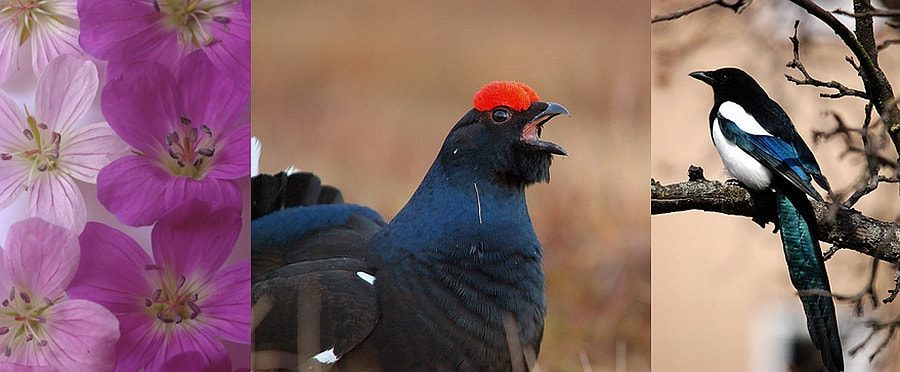
- Black grouse Lyrurus tetrix
- Red fox Vulpes vulpes
- Katydids & crickets
- Insect sperm & eggs
- Plant–pollinator interactions
- Wild animal welfare
Latest news
A few new papers to catch up on. Beverley Wilson's paper on fear and frustration in dogs is out in Frontiers in Psychology, and Rebecca Chen's black grouse genomics work has appeared in Nature Ecology & Evolution and Current Biology. Also out: a katydid diet and weaponry paper with Lewis Holmes and Fernando Montealegre-Z, and an editorial on animal and plant ethics in research in Methods in Ecology and Evolution. On the red fox front, with Blake Morton: Georgia Freer is a co-author on our Animal Behaviour paper showing that foxes with longer urban exposure explore and problem-solve more, plus new papers in Biological Conservation and Human Dimensions of Wildlife.
Congratulations to Ruben Culqui Salazar, who passed his PhD viva on the distribution and ecology of caecilians in Ecuador. Well done Dr Culqui Salazar!
Congratulations to Hafiza Maira Munir on passing her PhD viva, for her work on lesser wax moths. Well done Dr Munir!
Graziella Iossa and I have been awarded a Leverhulme Trust grant to study how insect eggs and sperm coevolve, building on our HFSP work on sperm evolution. The project funds a three-year PhD studentship and a three-year postdoc. Read more on Graziella's site.
Delighted to say we have been awarded a Wild Animal Initiative Challenge Grant to develop, test and validate indicators of wild insect welfare. Using Dubia cockroaches, two-spotted crickets and carrion beetles, we'll measure stress responses, fat reserves and movement, check them against cognitive bias tests, and then take the most practical indicators out to wild carrion beetle populations.
Congratulations to Rebecca Chen, who passed her PhD viva on the genomics of sexually selected traits in black grouse, co-supervised with Joe Hoffman and Kees van Oers. Well done Dr Chen!
Our first ManyBirds paper is out in PLOS Biology. Led by Rachael Miller, 129 collaborators from 82 institutions in 24 countries tested neophobia (fear of novelty) in 1,439 birds from 136 species, from penguins to parrots. Dietary specialists and migratory species were the most wary of new objects, and individual birds were consistent in how cautious they were when retested weeks later. I was part of the Study 1 leadership team and helped with the data curation and analysis. A great example of what big team science can do; find out more at ManyBirds.
Welcome to Karen Salazar Niño, who joins the group with a Marie Curie Fellowship to study collective sperm movement.
In October I was invited to the Max Planck Institute of Animal Behaviour to talk about wild animal welfare. Many thanks to my hosts Inge Mueller, Wolfgang Fiedler and Daniel Zuniga; it was a great visit. At the end of the month I also visited Bielefeld University to present our HFSP work on sperm evolution. Great to catch up with Joe Hoffman, Rebecca Chen and Kees van Oers.
Busy summer so far. Blake Morton, Simon Clegg and I have been awarded a Wild Animal Initiative grant to study parasites and pathogens in urban wildlife, with a new PhD starting in October. We've also had several papers published, including fox genetics in Australia and sperm–egg coevolution.
Some personal news (which I never really like sharing): I was promoted to Professor of Animal Ecology.